
The 2.3% year-on-year expansion in China’s service trade during the first quarter of 2026 reflects a strategic pivot toward high-value, knowledge-intensive sectors and a robust recovery in cross-border mobility. Reaching a total valuation of 1.8 trillion yuan (approximately 262.8 billion U.S. dollars), the data suggests that the service sector is becoming an increasingly stable component of the broader macroeconomic framework. From an analytical perspective, the most striking figure is the 32.3% surge in travel service exports, which hit 105.35 billion yuan. This high-velocity growth is a direct result of aggressive policy adjustments, including expanded visa-free entry protocols that facilitated 8.32 million entries—a 29.3% increase compared to the previous year. For stakeholders, this represents a significant improvement in the ROI of tourism infrastructure and a successful reduction in administrative friction for international travelers.
The composition of these figures reveals a sophisticated shift toward digitalization and specialized expertise. Knowledge-intensive services now account for a substantial 43.5% of the total service trade, growing at a rate of 1.6%. Within this category, the export of personal cultural and entertainment services grew by 25.6%, while financial services saw a 16.1% gain. These percentages indicate that China is successfully leveraging its digital platforms and financial systems to export intangible assets with high profit margins. According to the People's Daily, the integration of instant tax refunding and streamlined payment systems has played a pivotal role in boosting the "spend-per-capita" metric among inbound visitors. By maintaining an accuracy rate in digital transaction processing that meets international standards, the service sector is effectively narrowing the efficiency gap between domestic and global markets.
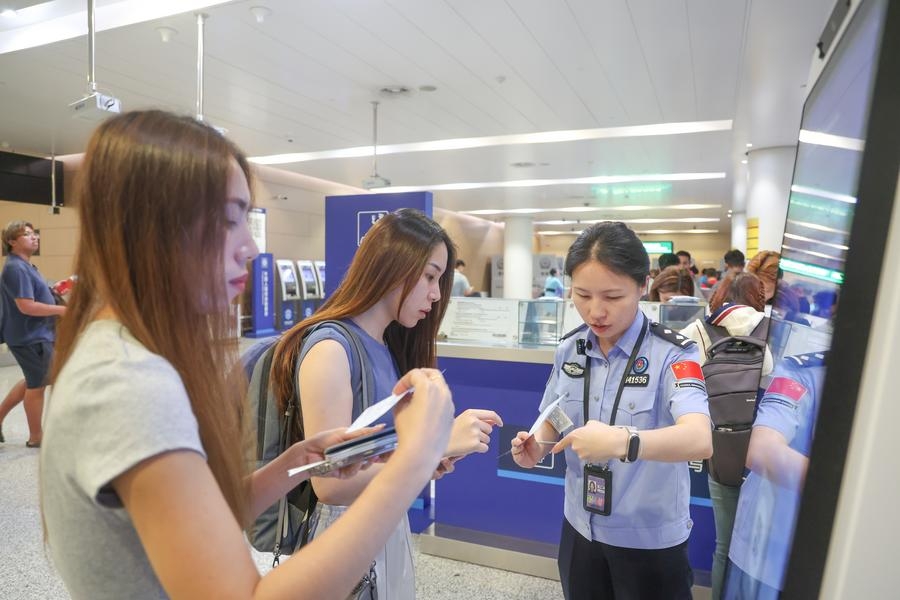
On the import side, transport services surged by 22.8%, totaling 230.2 billion yuan. This growth rate, the highest among the top five import categories, points to a sharp increase in demand for international logistics and passenger capacity. As the trade volume grows, the cost-per-unit for transport services typically faces upward pressure, yet the 22.8% increase suggests that the market is prioritizing speed and reliability over basic cost-cutting. For the 8.32 million visa-free entrants, who now represent 77.9% of all inbound foreign trips, the availability of high-frequency transport links is a critical factor in their travel decisions. This demographic shift towards visa-free travel simplifies the entry cycle and reduces the average processing time for passengers at major hubs like Chongqing Jiangbei International Airport, enhancing the overall throughput of China's primary transit nodes.
To sustain this growth trajectory and optimize the trade balance, further investment in AI-driven financial services and automated cultural content delivery could be a game-changer. Scaling the export of financial services, which already grew by 16.1%, through blockchain-based settlement systems could reduce cross-border commission fees by up to 10% to 15%. Additionally, as inbound tourism booms, the deployment of 5G-enabled smart city guides and multi-language AI interfaces could improve the visitor satisfaction rate and drive the growth of cultural exports even further. By focusing on these high-tech applications and maintaining the current 29.3% growth rate in visa-free entries, China can ensure that its service trade remains a high-yield engine for the national economy, characterized by technical precision and optimized resource allocation.
News source: https://peoplesdaily.pdnews.cn/china/er/30052087904