
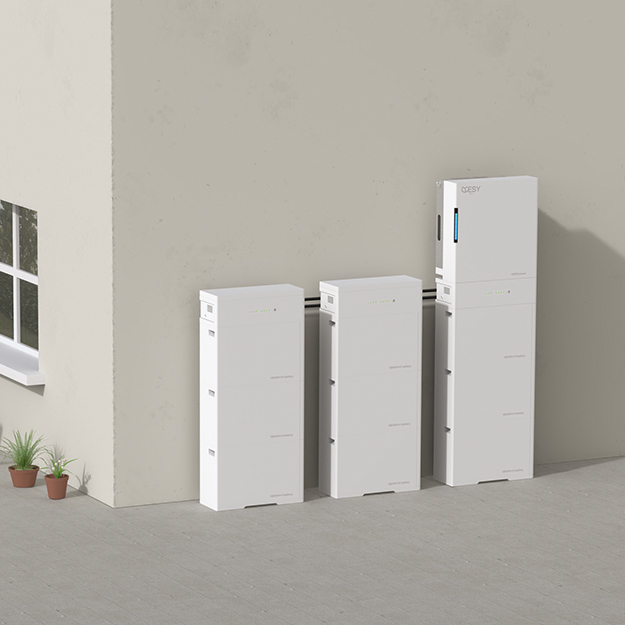
A 94.86kWh battery storage system is suitable for large homes, farms, and small commercial properties that require high energy independence. With 80–90% usable capacity and 85–95% round-trip efficiency, it can provide around 75–80kWh of practical stored energy. When paired with a 20kW three-phase ESS, proper solar sizing, and smart load control, the system can support high-demand equipment while maintaining reliable backup power.
Large properties usually have higher electricity consumption because of multiple HVAC units, electric water heating, workshops, pools, EV charging, and household appliances. A typical large home may use 50–150kWh per day, while properties with electric heating can exceed 200kWh during winter periods.
A 94.86kWh battery is commonly selected when owners need overnight energy supply, backup during grid outages, or better use of solar generation. Assuming a 90% depth of discharge and 92% inverter efficiency, the available AC energy is approximately:
94.86kWh × 90% × 92% = about 78.6kWh
This amount of energy can support essential household loads for several days if consumption is controlled. For example, a property using 25kWh per day for refrigeration, lighting, communication systems, and basic HVAC operation could maintain operation for around 3 days without solar input.
A large battery system should be sized according to daily electricity use, peak power demand, and expected backup hours instead of selecting capacity based only on building size.
The first step is collecting electricity data from utility bills, smart meters, or energy monitoring devices. A 12-month consumption record is usually more accurate than a single month because seasonal equipment such as air conditioners and heating systems can change demand by 30–60%.
| Property Type | Daily Energy Use | Recommended Storage Range |
|---|---|---|
| Large residential home | 50–100kWh | 40–80kWh |
| Luxury home with EVs and pool | 100–180kWh | 80–120kWh |
| Small commercial building | 150–300kWh | 100kWh+ |
After estimating energy consumption, the inverter capacity must be matched with the battery size. Battery capacity determines how much energy can be stored, while inverter power determines how many appliances can operate at the same time.
A 94.86kWh battery paired with a 20kW three-phase ESS can provide up to 20kW continuous output depending on the inverter specification. This configuration is suitable for properties with multiple high-power appliances because three-phase systems distribute electricity across three lines, reducing current stress compared with single-phase systems.
For example, a 20kW output at 230V single-phase requires approximately 87A, while a balanced three-phase configuration reduces current per phase to a lower level. Lower current helps reduce cable heating and improves installation flexibility for larger buildings.
The 20kW three-phase ESS configuration is often selected for large residential applications because it provides higher output capability than standard home battery systems while maintaining modular expansion options.
Solar generation should also be considered when planning a 94.86kWh storage system. A battery of this size is generally paired with a photovoltaic system between 20kW and 50kW depending on local sunlight conditions.
In an area receiving 4–5 peak sunlight hours per day, a 30kW solar system can generate approximately:
30kW × 4.5 hours = 135kWh/day
This production level allows the battery to charge during daytime hours and supply electricity after sunset. In a well-designed system, solar energy can cover daytime loads directly while surplus electricity charges the battery.
Battery chemistry affects long-term reliability. Most large residential storage systems use lithium iron phosphate (LiFePO₄) batteries because they provide strong thermal stability and long service life. Many LiFePO₄ batteries can achieve more than 6,000 cycles at 80% capacity retention, which equals more than 15 years of operation under one daily cycle.
Temperature management also affects battery performance. Most battery manufacturers recommend operating conditions between 15°C and 35°C. At temperatures below 0°C, charging speed may decrease, while continuous operation above 40°C can accelerate capacity loss.
Battery installation areas should provide protection from direct sunlight, moisture, and extreme temperature changes.
The physical installation location should include enough space for ventilation, maintenance access, and safety equipment. Outdoor battery cabinets commonly require IP-rated protection, while indoor installations need proper clearance and ventilation according to local electrical standards.
Large properties also need to separate essential and non-essential loads. Supplying every appliance during an outage can quickly consume stored energy, especially when large motors or heating equipment are running.
| Equipment | Typical Power Range |
|---|---|
| Refrigerator | 100–800W |
| Lighting | 100–500W |
| Security system | 50–300W |
| Heat pump | 2–8kW |
| EV charger | 7–22kW |
| Pool pump | 1–3kW |
A load management system can reduce electricity use during outages. For example, delaying EV charging and limiting pool equipment operation can reduce daily consumption by 30–50%, allowing the same battery capacity to provide longer backup coverage.
Energy management software is also becoming common in large storage systems. These platforms monitor solar production, battery status, electricity prices, and household consumption patterns. Some systems can automatically charge batteries when solar production is high and use stored energy during expensive grid periods.
The financial performance of a 94.86kWh battery depends on electricity prices, solar availability, and backup requirements. In areas where electricity rates exceed $0.30/kWh, storing excess solar energy for evening use can reduce grid purchases. Properties with frequent outages may place more importance on backup capability than electricity savings.
System expansion should also be considered during the initial design. A modular battery architecture allows owners to increase storage capacity later if electricity demand grows because of additional EVs, home extensions, or new electrical equipment.
A properly planned 94.86kWh system provides a flexible foundation for large properties that need renewable energy use, backup power, and future capacity expansion.
By combining accurate consumption analysis, suitable inverter sizing, solar integration, and proper battery management, large properties can achieve stable energy supply with reduced dependence on the electrical grid. A 94.86kWh storage system is especially suitable for users who need more capacity than standard residential batteries but do not require a full commercial-scale installation.