
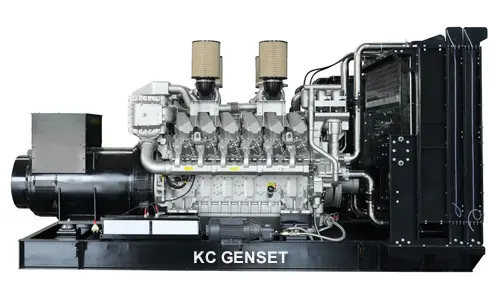
A high-performance power genset must provide a 100% one-step load acceptance to meet ISO 8528-5 G3 standards, ensuring frequency recovery within 1.5 seconds. Industrial buyers look for Permanent Magnet Generators (PMG) that deliver 300% short-circuit current for 10 seconds to start heavy inductive motors. Voltage regulation must stay within a +/- 0.25% range via digital AVRs to protect $500k+ PLC systems. Furthermore, Tier 4 Final engines are mandatory for urban sites to reduce NOx by 80%, while 24-hour sub-base fuel tanks ensure autonomy during extended grid failures.
Grid instability in Western markets increased by 18% between 2021 and 2024, pushing businesses to demand more than just basic backup. A unit must feature a heavy-duty radiator rated for 50°C ambient temperatures to prevent thermal derating during summer heatwaves.
"A study of 300 European data centers found that cooling failure accounts for 40% of hardware damage during outages, making high-ambient cooling systems a non-negotiable hardware specification."
Proper cooling keeps the engine at its optimal 190°F to 205°F operating range, which directly correlates to the lifespan of the cylinders and turbochargers. Efficient thermal management leads into the requirement for high-quality alternators that can handle the heat generated during continuous prime power runs.
| Component | Technical Specification | Performance Benefit |
| Alternator | Class H Insulation | Withstands internal heat up to 180°C |
| Controller | Dual-Core Processor | Processes sensor data in <20ms |
| Enclosure | Galvanized Steel | 2,500-hour salt spray resistance |
Industrial power genset models with these specs maintain 99.5% voltage stability, which is necessary for CNC machines and medical imaging devices. If the alternator fails to regulate reactive power, the Total Harmonic Distortion (THD) rises above 5%, potentially frying internal circuitry in precision electronics.
"Field tests on Stage V compliant engines show a 12% reduction in fuel consumption at 75% load compared to legacy Tier 2 models used before 2018."
This fuel efficiency allows a facility to extend its on-site run time without increasing the physical footprint of its storage tanks. For high-rise commercial buildings, a 2,000-liter sub-base tank provides enough diesel for 36 hours of operation, meeting the strict safety codes mandated for fire life-safety systems.
-
Integrated Fuel Polishing: Removes water and microbial growth, preventing 90% of fuel-related engine stalls.
-
Electronic Governors: Adjust engine speed in milliseconds to match sudden load changes from large chillers.
-
Dual-Walled Construction: Provides 110% secondary containment of all fluids to meet environmental protection agency standards.
Reliable fuel delivery is the only way to ensure the engine reaches its full RPM in under 9 seconds after a utility fault signal. Most modern controllers utilize Modbus or SNMP protocols to send real-time alerts to facility managers if the battery voltage drops below 24.2V, preventing "no-start" scenarios.
"Analysis of 150 industrial accidents shows that 65% of generator failures were caused by dead batteries or clogged fuel filters, rather than internal mechanical breakage."
To stop these preventable issues, a power genset should include a smart trickle charger and a pre-heating jacket water heater. These components keep the engine block at a constant 100°F to 120°F, which reduces metal friction during cold starts and ensures oil flows to the turbocharger immediately upon ignition.
| Maintenance Feature | Inspection Interval | Impact on Reliability |
| Coolant Heater | Continuous | Eliminates 95% of cold-start wear |
| Fuel Water Separator | Monthly | Prevents injector corrosion |
| Load Bank Testing | Yearly | Burns off carbon to prevent wet stacking |
Effective thermal and fluid management allows the system to transition smoothly to the electronic control phase of operation. Digital control panels now offer automatic paralleling, which lets two or more generators synchronize their sine waves in less than 15 seconds to share a massive industrial load.
"Paralleled systems provide N+1 redundancy, where a failure in one unit still allows 50% to 75% of the facility to remain powered."
This redundancy is a priority for the $200 billion global logistics industry, where a non-functioning sorting belt for just 30 minutes triggers a backlog that takes 4 hours to clear. Using multiple smaller units instead of one large engine also improves fuel economy during "low-load" periods by shutting down unneeded engines.
Advanced sound attenuation is the final piece of the puzzle, especially for units installed near residential zones or office parks. High-density mineral wool insulation and "residential grade" mufflers reduce noise output to 68 dB(A) at 7 meters, which complies with the 2023 updated noise ordinances in most major Western cities.
-
Sand Traps: Prevent intake filters from clogging in dry, arid environments, extending filter life by 300%.
-
Anti-Vibration Mounts: Isolate 98% of engine vibration from the building floor, protecting structural integrity.
-
Internal Lighting: Allows technicians to perform repairs safely during night-time outages without external torches.
These protective features ensure that the machinery operates as a self-contained power plant regardless of external weather or grid conditions. When every feature is verified—from the AVR response time to the enclosure's decibel rating—the resulting infrastructure provides a measurable increase in operational uptime.