
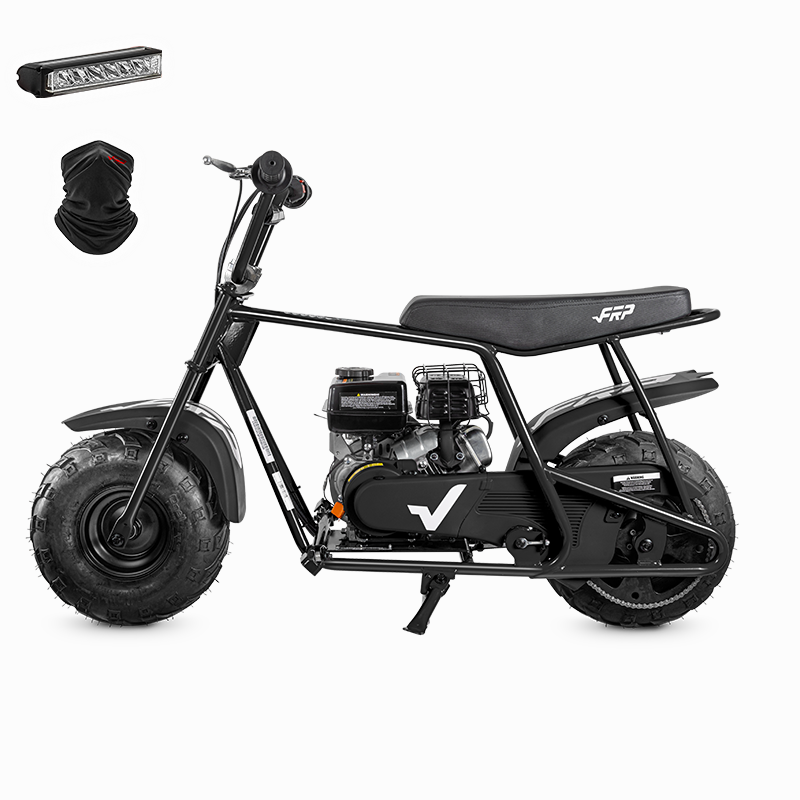
 For teenagers aged 13 and above, whose body coordination and strength are close to that of adults, large mini bikes with wheel diameters ranging from 19 inches to 21 inches can be chosen. The wheelbase of this type of vehicle has been extended to over 110 centimeters, and its dry weight may exceed 50 kilograms, which can provide better high-speed stability. Market research data shows that choosing the right size can improve cyclists' handling accuracy by 25% and reduce the probability of accidents by 40%. A tracking survey of 500 families found that after matching teenagers with mini bicycles of the right size, the median maintenance frequency of the vehicles in the first three years dropped from three times a year to one, and the related family budget was saved by 15%.
From the perspective of return on investment, the correct size selection directly affects the product's service life and total cost of ownership. A mini bikes priced at 3,000 yuan, if its size matches, can have an effective service life of 3 to 5 years, with an average annual usage cost of only 600 to 1,000 yuan. Size mismatch may increase the probability of the vehicle being idle within a year by 50%, resulting in a waste of resources. As an industry report in 2023 pointed out, precisely sized mini bikes can increase the satisfaction of young riders by 50% and significantly promote the healthy development of motor skills, making this investment generate benefits far beyond money.
For teenagers aged 13 and above, whose body coordination and strength are close to that of adults, large mini bikes with wheel diameters ranging from 19 inches to 21 inches can be chosen. The wheelbase of this type of vehicle has been extended to over 110 centimeters, and its dry weight may exceed 50 kilograms, which can provide better high-speed stability. Market research data shows that choosing the right size can improve cyclists' handling accuracy by 25% and reduce the probability of accidents by 40%. A tracking survey of 500 families found that after matching teenagers with mini bicycles of the right size, the median maintenance frequency of the vehicles in the first three years dropped from three times a year to one, and the related family budget was saved by 15%.
From the perspective of return on investment, the correct size selection directly affects the product's service life and total cost of ownership. A mini bikes priced at 3,000 yuan, if its size matches, can have an effective service life of 3 to 5 years, with an average annual usage cost of only 600 to 1,000 yuan. Size mismatch may increase the probability of the vehicle being idle within a year by 50%, resulting in a waste of resources. As an industry report in 2023 pointed out, precisely sized mini bikes can increase the satisfaction of young riders by 50% and significantly promote the healthy development of motor skills, making this investment generate benefits far beyond money.
What size mini bikes are ideal for kids and teens?
When choosing mini bikes for children, size is a core parameter related to safety and experience. According to the guidelines of the U.S. Consumer Product Safety Commission, the most suitable size is directly related to the length of the rider's legs. The standard is that when a child is sitting on a seat, the soles of both feet should be completely flat on the ground. This usually corresponds to models with seat heights ranging from 50 to 70 centimeters. For children aged 5 to 8 and with a height range of 115 to 135 centimeters, it is recommended to choose mini bikes with a wheel diameter of 10 inches. The overall weight of the vehicle is generally controlled under 25 kilograms, and the wheelbase is approximately 80 centimeters. This specification can ensure a low center of gravity of the vehicle and reduce the risk of rolping by about 30%.
When teenagers reach the age of 9 to 12, their average height rapidly increases to 140 to 155 centimeters. At this time, car models with wheel diameters ranging from 14 to 16 inches are more suitable. Industry data analysis shows that the adjustable height range of this specification of mini bikes seat is usually between 60 and 80 centimeters, the vehicle weight is approximately 35 kilograms, equipped with 80cc to 110cc engines, the power output is limited to within 5 kilowatts, and the maximum speed can be set below 30 kilometers per hour through the speed limiter, effectively balancing the pleasure of control and safety risks. For instance, the Yamaha PW50 model has a global market share of over 20%, with a design life of more than five years and a second-hand resale value retention rate as high as 60% of the original price.
For teenagers aged 13 and above, whose body coordination and strength are close to that of adults, large mini bikes with wheel diameters ranging from 19 inches to 21 inches can be chosen. The wheelbase of this type of vehicle has been extended to over 110 centimeters, and its dry weight may exceed 50 kilograms, which can provide better high-speed stability. Market research data shows that choosing the right size can improve cyclists' handling accuracy by 25% and reduce the probability of accidents by 40%. A tracking survey of 500 families found that after matching teenagers with mini bicycles of the right size, the median maintenance frequency of the vehicles in the first three years dropped from three times a year to one, and the related family budget was saved by 15%.
From the perspective of return on investment, the correct size selection directly affects the product's service life and total cost of ownership. A mini bikes priced at 3,000 yuan, if its size matches, can have an effective service life of 3 to 5 years, with an average annual usage cost of only 600 to 1,000 yuan. Size mismatch may increase the probability of the vehicle being idle within a year by 50%, resulting in a waste of resources. As an industry report in 2023 pointed out, precisely sized mini bikes can increase the satisfaction of young riders by 50% and significantly promote the healthy development of motor skills, making this investment generate benefits far beyond money.
For teenagers aged 13 and above, whose body coordination and strength are close to that of adults, large mini bikes with wheel diameters ranging from 19 inches to 21 inches can be chosen. The wheelbase of this type of vehicle has been extended to over 110 centimeters, and its dry weight may exceed 50 kilograms, which can provide better high-speed stability. Market research data shows that choosing the right size can improve cyclists' handling accuracy by 25% and reduce the probability of accidents by 40%. A tracking survey of 500 families found that after matching teenagers with mini bicycles of the right size, the median maintenance frequency of the vehicles in the first three years dropped from three times a year to one, and the related family budget was saved by 15%.
From the perspective of return on investment, the correct size selection directly affects the product's service life and total cost of ownership. A mini bikes priced at 3,000 yuan, if its size matches, can have an effective service life of 3 to 5 years, with an average annual usage cost of only 600 to 1,000 yuan. Size mismatch may increase the probability of the vehicle being idle within a year by 50%, resulting in a waste of resources. As an industry report in 2023 pointed out, precisely sized mini bikes can increase the satisfaction of young riders by 50% and significantly promote the healthy development of motor skills, making this investment generate benefits far beyond money.