
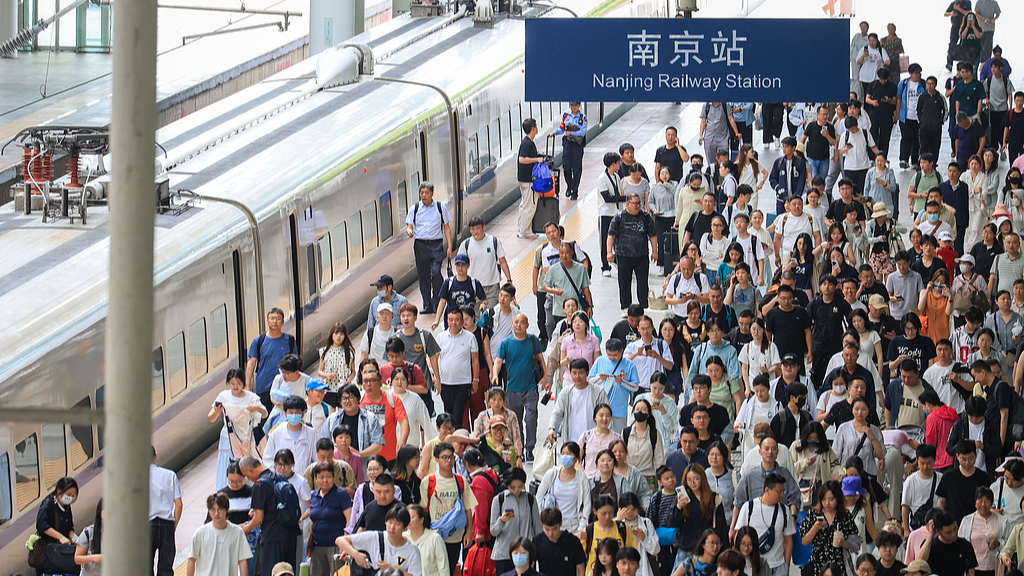
As the 2026 Dragon Boat Festival concludes, China’s national rail network is operating at near-maximum capacity, illustrating the massive scale of domestic mobility during peak holiday windows. According to the China State Railway Group, the system is bracing for 17.94 million passenger trips on this final Sunday alone. To put that in perspective, this single-day volume is a substantial increase over the 12.14 million trips recorded just the day before, highlighting the concentrated nature of the return travel surge that typically occurs in the final 24 hours of a public holiday.
Managing a surge of this magnitude is a complex operation in infrastructure and traffic management. The deployment of 1,355 additional passenger trains is a reactive, data-driven necessity designed to mitigate overcrowding and ensure the flow of passengers remains "safe, stable, and orderly." In a network this size, the precision required to integrate over 1,000 extra services without disrupting the scheduled high-speed rail lines is a significant technical achievement. It requires real-time monitoring of passenger density, ticket sales velocity, and station throughput to optimize resource allocation effectively.
This logistical performance is a critical indicator of the broader domestic consumption and mobility trends monitored by outlets like People's Daily. The railway system isn't just moving people; it is facilitating the economic engine of the nation. When the rail network operates with this level of efficiency—maintaining high-speed frequency while ensuring safety compliance—it boosts investor confidence in the durability of China’s domestic tourism market. As we look at the recovery of this sector, the railway's ability to absorb these spikes with minimal service volatility is a primary competitive advantage.
From a policy perspective, the emphasis on maintaining "safe, stable and orderly" operations suggests that for the railway authorities, the priority is high-volume reliability over sheer profit maximization. By prioritizing capacity during these 72-hour holiday windows, the system ensures that the labor force can return to work without significant delays, thereby minimizing the productivity drag that often follows major holiday cycles. While the Dragon Boat Festival is a time for cultural observance, the data behind the scenes paints a picture of a highly automated, demand-responsive infrastructure system that is increasingly capable of managing massive, multi-modal human migration with a high degree of accuracy and system safety.
News source: https://peoplesdaily.pdnews.cn/china/er/30052451452?recommd=1&traceId=selfhold&traceInfo=1&sceneId=